
“Time is free, but it’s priceless. You can’t own it, but you can use it. You can’t keep it, but you can spend it. Once you’ve lost it you can never get it back.” Harvey Mackay
Developing time management skills is a journey that may begin with this Guide, but needs practice and other guidance along the way.
One goal is to help yourself become aware of how you use your time as one resource in organizing, prioritizing, and succeeding in your studies in the context of competing activities of friends, work, family, etc.
First: try our exercise in time management:
How do you spend your time each day?
Effective aids:
- Create a simple “To Do List”
This simple program will help you identify a few items, the reason for doing them, a timeline for getting them done, and then printing this simple list and posting it for reminders.
- Daily/weekly planner
Write down appointments, classes, and meetings on a chronological log book or chart.
If you are more visual, sketch out your schedule
First thing in the morning, check what’s ahead for the day
always go to sleep knowing you’re prepared for tomorrow
- Long term planner
Use a monthly chart so that you can plan ahead.
Long term planners will also serve as a reminder to constructively plan time for yourself
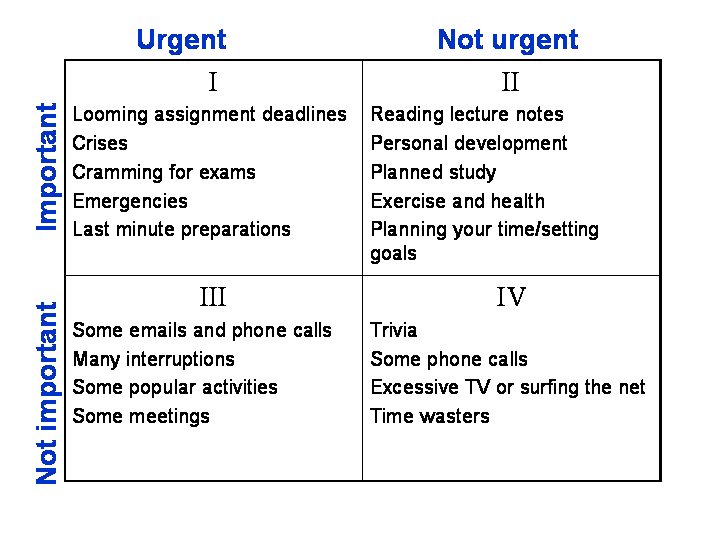
Practice the following techniques to become the master of your own time:
- Carry a schedule and record all your thoughts, conversations and activities for a week. This will help you understand how much you can get done during the course of a day and where your precious moments are going. You’ll see how much time is actually spent producing results and how much time is wasted on unproductive thoughts, conversations and actions.
- Any activity or conversation that’s important to your success should have a time assigned to it. To-do lists get longer and longer to the point where they’re unworkable. Appointment books work. Schedule appointments with yourself and create time blocks for high-priority thoughts, conversations, and actions. Schedule when they will begin and end. Have the discipline to keep these appointments.
- Plan to spend at least 50 percent of your time engaged in the thoughts, activities and conversations that produce most of your results.
- Schedule time for interruptions. Plan time to be pulled away from what you’re doing. Take, for instance, the concept of having “office hours.” Isn’t “office hours” another way of saying “planned interruptions?”
- Take the first 30 minutes of every day to plan your day. Don’t start your day until you complete your time plan. The most important time of your day is the time you schedule to schedule time.
- Take five minutes before every call and task to decide what result you want to attain. This will help you know what success looks like before you start. And it will also slow time down. Take five minutes after each call and activity to determine whether your desired result was achieved. If not, what was missing? How do you put what’s missing in your next call or activity?
- Put up a “Do not disturb” sign when you absolutely have to get work done.
- Practice not answering the phone just because it’s ringing and e-mails just because they show up. Disconnect instant messaging. Don’t instantly give people your attention unless it’s absolutely crucial in your business to offer an immediate human response. Instead, schedule a time to answer email and return phone calls.
- Block out other distractions like Facebook and other forms of social media unless you use these tools to generate business.
- Remember that it’s impossible to get everything done. Also remember that odds are good that 20 percent of your thoughts, conversations and activities produce 80 percent of your results.
What do you think about this 10 tips for a more productive day? Tell me your opinion.

Post by
Ana Gomes



















Comments